Decision-grade fields
Source, state, impacted system, process, affected version, cause of exposure, compensating controls, likelihood, consequence and risk tier.

RiskPulse
RiskPulse turns security findings into a continuous risk exposure management operating model: discover the signal, validate the exposure, make the risk decision, treat what matters and keep review evidence alive.
RiskPulse command view
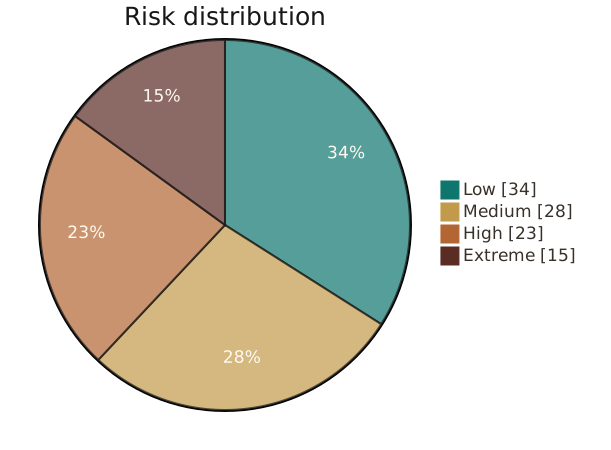
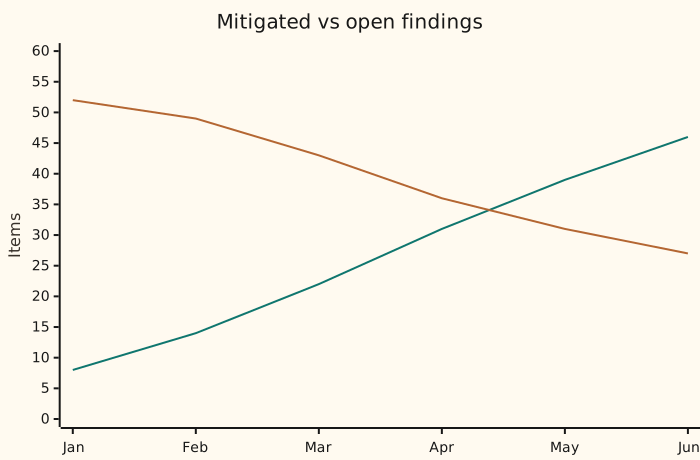
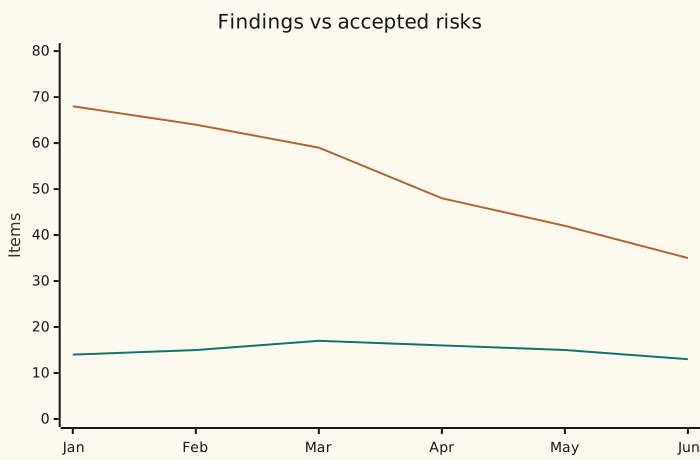
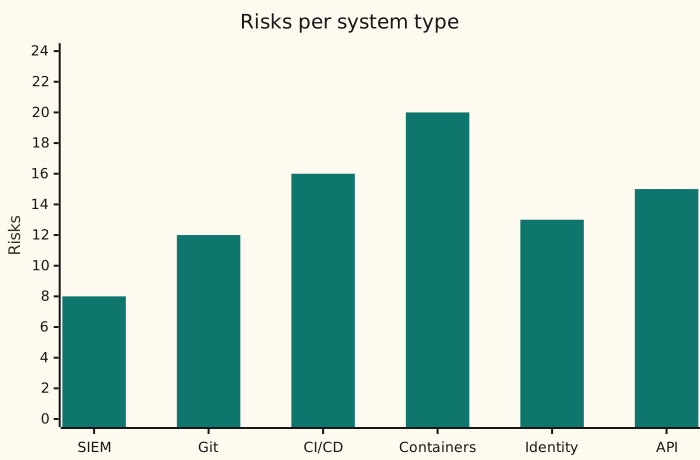
The moment it breaks
Security teams see findings arrive from tools, architecture reviews, testing, engineering teams and business context, but the signal is uneven.
Delivery teams need to know what must be treated now, what can be accepted, what is waiting on a vendor and what needs proof before closure.
Risk owners need review dates, treatment owners, decision history and dashboards that show whether exposure is improving or drifting.
The story
The state of the finding tells the truth about what is known. The workflow tells the truth about what happens next. Together they create the operating rhythm for continuous technology risk exposure management.
CREM loop
RiskPulse fits CTEM, CRTEM and CREM programs because it treats exposure as something that changes. A finding can be validated, accepted, reopened, escalated, vendor-managed, treated, verified and re-reviewed as the environment changes.

Workflow
Security review validates the exposure. Risk review frames likelihood, consequence and tier. Business review chooses the response. SSVC-style states keep the decision language simple: Track, Track*, Attend or Act.

Why the dashboard can be trusted
RiskPulse is designed so the charts are backed by fields, gates and health checks that make stale or incomplete risk data visible.
Source, state, impacted system, process, affected version, cause of exposure, compensating controls, likelihood, consequence and risk tier.
Security, risk and business reviews carry reviewer and date fields, so decisions can be checked without reconstructing a meeting trail.
Missing reviewers, missing dates, overdue treatment, Track* review intervals and risk-tier mismatches become visible before reporting day.
Reviewer assignment, independence checks and remediation verification routing reduce hand-offs while keeping human judgement in the loop.
Accepted risks carry review intervals and next review dates, with short review cycles for temporary acceptance and context-sensitive exposure.
Treatment owner, treatment due date, vendor reference, retest result and final resolution stay attached to the same item.
Operating signal
For security: Are severe exposures being validated, reduced and verified faster than new findings appear?
For delivery: Which overdue, due-soon and open findings need sprint capacity, vendor follow-up or release attention?
For risk: Which accepted risks need review, which temporary decisions are ageing, and where is exposure concentrating by system type?
Start
Ignitize designs practical CTEM, CRTEM and CREM workflows with dashboards that make security risk visible, owned and reviewable.